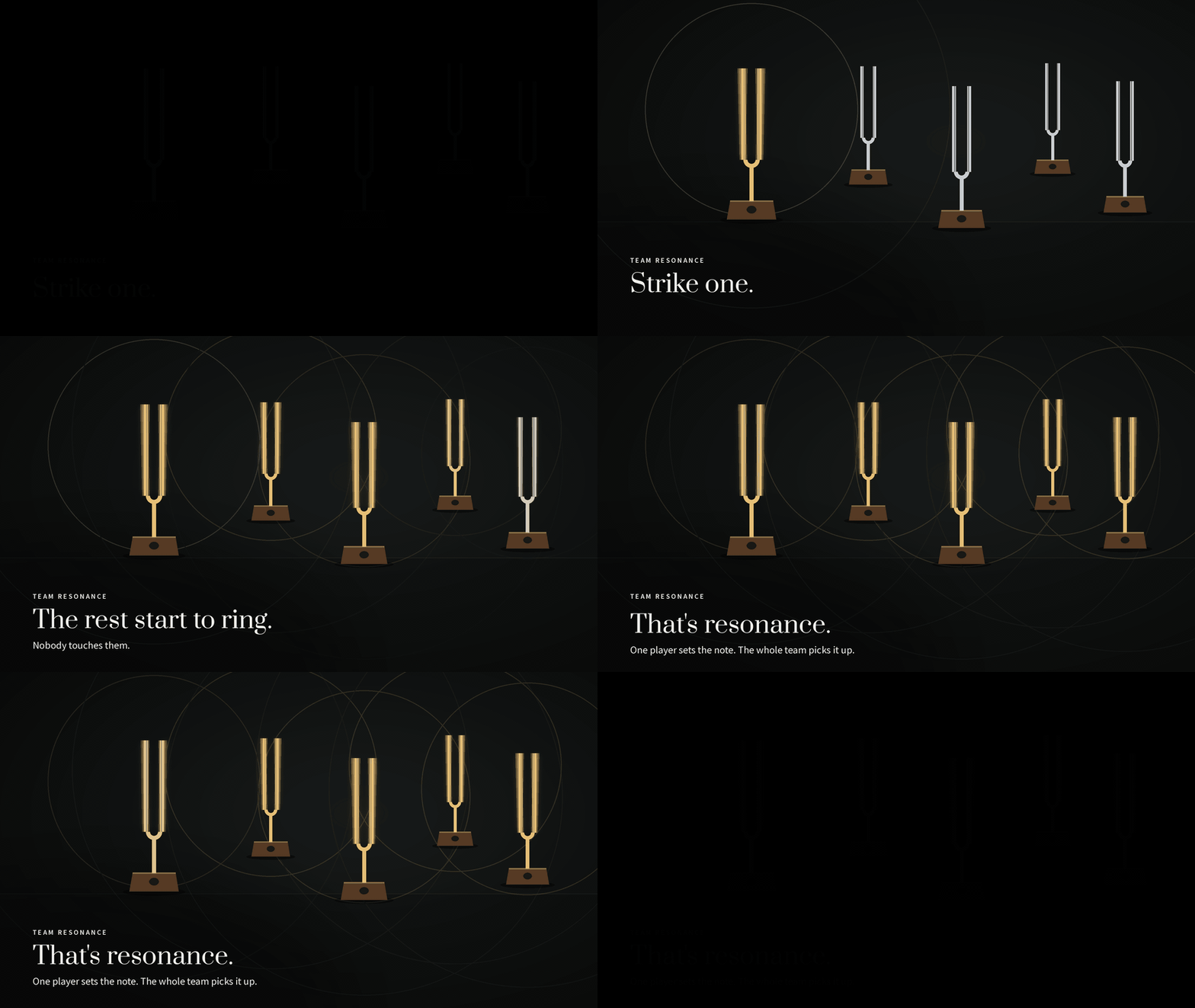
I train sports teams to feel, think, and move as one.

Not through workshops. Not through individual coaching. Through on-field drills that build measurable collective synchronization.

What is Team Resonance?

  • Stage 1: Scattered Individuals


    Players act alone, focused on their own game. Negative energy spreads fast after a mistake. Movement only happens after a shout or signal. The team is a collection of selves.

  • Stage 2: Conscious Connection

    Players start to read each other's body language. They sense where teammates will be without looking. They use emotions as fuel, not as a drain. The group is learning to feel, think, and move together.

  • Stage 3: Effortless Unity

    The team moves as one organism. Anticipation replaces reaction. Synchronization is instant and silent. This is resonance.

The Method: On the Field, Not in a Classroom

I thread resonance through your existing sessions, warm-up, attack and defence become the Feel, Think and Move slots. No extra time. Three drills, one per dimension, measurable from week one.

FEEL TOGETHER · Shared Rhythm

Take away sight, and players have to coordinate through rhythm and feel. Drill: Sensory Tuning: passing under progressive constraint, to a shared beat, a clap before each receive, then peripheral-only, then blind. When it clicks, the group hears the rhythm before it sees the ball. Tell: Reset Speed - how fast the group recovers its rhythm after a mistake.

THINK TOGETHER · Shared Perception

Compress the time to decide and hide the picture, and players must share one read and commit together. Drill: One-Look Options: the attack starts blind to the defence, turns, and gets about a second to read it and pick one option, collectively, no talking. Three players seeing a different picture from the other three is the problem made visible. Tell: Shared-read latency - how fast the unit reads the same picture.

MOVE TOGETHER · Shared Timing

One cadence on collective movement; anyone a beat off makes a gap. Drill: Line-Speed Metronome: the line advances to a beat, responding to Hold / Blitz / Drift triggers as one unit. The first two seconds expose the weak links, usually the players furthest from the core. Tell: Sync Success Rate - how often coordinated actions complete under pressure.

In Practice: Gooi Rugby U16s

A six-week pilot.

The coaches saw a technical problem: the final pass to the wings kept breaking down. I saw a resonance problem. The wide players weren’t synchronised with the core group, or in the same moment. Fix the state, and the skill expresses itself.

I embedded the three drills inside the team’s normal sessions, no extra time, no separate workshops. Within two weeks the head coach was running the warm-up drill on game days without being asked. By week four he was writing resonance language into his own training plans. The drills transferred because they felt like rugby, not like psychology.

This is proof the method works and that state drives skill - not a claim that one sport’s numbers carry to another. A pilot in your sport builds your evidence.

About Me.

I've spent twenty years working with teams. In sport, in startups, in Fortune 500 companies. The pattern is always the same: groups of talented individuals who can't get out of their own way.

The reason? We focus on the self. Self-help. Self-development. Self-improvement. Players and professionals operate as disconnected individuals. Their talent is real. Their connection isn't.

My work is built on one principle: performance emerges from collective attunement, not individual optimization. Before a team can execute a system, they have to share a state. Same rhythm. Same picture. Same moment.

I'm not a sports psychologist. I don't train individual mental skills. I'm not a team-building facilitator. I don't run trust falls or personality tests. I'm a Team Resonance Coach. I train the field between bodies. The bit that shows up when the defensive line moves as one, when the attack reads the same gap at the same time, when a team recovers from a mistake in 1 second instead of 10.

My method: drills, measurement, and leadership as a tuning fork. Less workshops, more on-field replication. Less theory, more measurable rhythm.

Currently working with youth and semi-professional sports teams in the Netherlands.

They’re already benefiting